Posts mit dem Label Generali Foundation werden angezeigt. Alle Posts anzeigen

Freitag, 13. Dezember 2013

Conceptual art is a bunk... It’s a felt, it’s feeling, it’s felt (Robert Smithson)

Symposium: Conceptual art is a bunk...It’s a felt, it’s feeling, it’s felt (Robert Smithson), 2013. Photo: Dario Punales

December 12, 2013, 5–8 p.m. (English)
Symposium

The symposium takes up themes and motifs in Gertrud Sandqvist’s exhibition Against Method—the curator chose the title as a reference to Paul Feyerabend’s widely read book Against Method: Outline of an Anarchist Theory of Knowledge (1975), in which he turns against the rationalist methodology of a theory of science aiming for universal validity and casts doubt on the scientific ambition to attain knowledge through the application of exact and systematic methods. He instead proposes “irrational means” as the basis for experimental research. Scientists, he argues, should adapt approaches from the arts. Feyerabend’s critique came during the heyday of Conceptual art, when artists, for their part, sought to integrate structuralism and scientific methodology into their work. The various contributions to the symposium address the interrelations between structuralism and Conceptual art and elaborate on the question: to which extent did the appropriation of structuralist theories bring Conceptual art to the limits of its attempts at rationalization?
Eve Meltzer’s lecture investigates the reintegration of the human subject into conceptual works and examines how affect and system condition and complement each other. The artist Joachim Koester, meanwhile, explores the analysis of the non-rational in Sol LeWitt’s writings and minimalist objects. Elisabeth von Samsonow and the artist Ida-Marie Corell collaborate to stage a lecture-performance, a critical dialogue on the question of method and the production of knowledge.

Eve MeltzerSystems We Have Loved
Lecture (English)

Joachim KoesterConceptual artists are mystics rather than rationalists
Lecture (English)

Elisabeth von Samsonow with Ida-Marie Corell, ArtistHybrid Knowledge
Lecture-performance (English)

Moderator: Gertrud Sandqvist, Curator

Montag, 2. Dezember 2013

Anniversary's publication

Cover, A Book about Collecting and Exhibiting Conceptual Art after Conceptual Art, 2013. Photo: Dario Punales

A Book about Collecting and Exhibiting Conceptual Art after Conceptual Art
Eds. Sabine Folie, Georgia Holz, Ilse Lafer
With texts by Sabeth Buchmann, Juli Carson, Guillaume Désanges, Helmut Draxler, Sabine Folie, Christian Höller, Eve Meltzer, Gertrud Sandqvist, Luke Skrebowski, Ian Wallace, Camiel van Winkel, and a conversation between Hal Foster und Helmut Draxler
Germ./Engl., 540 p., 430 color- and b&w-ill., hardcover
Verlag der Buchhandlung Walther König, Cologne

Shop

Mittwoch, 27. November 2013

Curator Gertrud Sandqvist on her current exhibition at Generali Foundation "Against Method"

Georgia Holz: This year’s guest curators—Guillaume Désanges, Helmut Draxler, and now you—have chosen very diverse approaches in presenting the collection. While Guillaume brought together a rather didactic and as he called it popular exhibition for which he selected many “pioneers” of Conceptual art, Helmut reflected on the interaction of collecting and exhibition making at the Generali Foundation. Your approach again is a different one, how would you describe it?

Gertrud Sandqvist: A collection could be there mainly for study purposes, but as soon as one exhibits it, it also creates an art experience, and it is this experience I would like to focus on. When it comes to Conceptual art, this focus is not at all self-evident on the contrary many of the experiments and thoughts about Conceptual art have questioned what this “experience” consists of. But if one looks closer into many of the works in the Generali Foundation Collection, they point at or call for precisely the experience, which means that there is a difference between seeing them in reality and reading about them or to "get the idea". If this difference exists, I mean that one could talk about an art experience also when it comes to Conceptual art, which means that there is integrity in the artwork which goes beyond its concept.

Georgia Holz: You said, what interests you most in the Generali Foundation Collection is its ambiguities, fissures as you call them. While the collection as a whole is striving for identity as a coherent Conceptual art collection, it is the autonomy of artworks themselves that is able to break with this reading. You use the phrase "to spill over" for describing this autonomy. Could you further explain what this "spilling over" of the art works means?

Gertrud Sandqvist: I believe Marcel Duchamp had a point when he was writing about the “art co-efficient,” which according to him is there in all art. The art co-efficient means that there is something in the artwork that the artist didn't intend, and it is precisely the unintended, which transforms a work into art. This is of course exactly what the conceptual artists denied or at least tried to avoid. But as soon as one materializes an idea something happens, which cannot be completely controlled—not to say what happens when this artwork meets the spectator. This is becoming even more obvious when you find such a fine and coherent collection as the one in the Generali Foundation. A collection is a result of choices, of decisions, in the end of interpretations. It means that one, from the extremely rich “intensity field,” which is an artwork, decides on one (or two or more) parameters which make it possible to include the work in, for instance a collection of Conceptual art. But even here there are aspects of the artwork which act diversely. This is a great strength, I think, which makes it possible for the artwork to expand over the moment in time and context when it ws conceived.

Georgia Holz is Assistant-Curator at Generali Foundation.

Donnerstag, 21. November 2013

Lili Dujourie, artist, in conversation with Gertrud Sandqvist, curator


November 20, 2013, 7 p.m. (English)

In her early video pieces from the 1970s and 1980s, the Belgian artist Lili Dujourie radically and rigorously explored the still-young medium. Video technology not only enabled her to document her actions in real time, it also allowed her to stage intimacy. Hommage à … I–V, a series of five videos, revolves around a dual regime of the gaze between theatrical pose and voyeuristic control. The artist presents her own body in a play between exposure, concealment, and the camera as a proxy for the viewer, an embodiment of the “pure” gaze. She showcases the entire register of female exhibitionism and reenacts the poses of art history’s nudes. Yet Dujourie is not a passive exponent of a desiring gaze but a self-determined agent creating an alternative narrative of the female body. The subject-object dichotomy gives way to a subject-subject relationship.

Held as part of Vienna Art Week.

Mittwoch, 20. November 2013

Mary Kelly, artist, in conversation with Gertrud Sandqvist, curator


November 19, 2013, 7 p.m. (English)

If there is a work of art that has comprehensively grasped, visualized, and contextualized the complexities of sensory and bodily experience in relation to a system, or more precisely, a structuralist matrix, it is Mary Kelly’s Post-Partum Document (1974–79). In this pioneering work, the artist addressed a topic that had been taboo—the subjective and physical experience of birth and motherhood—and lent it form by translating it into the systematic structure of a decidedly conceptualist aesthetic. Post-Partum Document was unsparingly analytical and revealed the conventions and stereotypes at work in feminism as well as Conceptual art. Kelly transcended the artistic and conceptual agenda of by resorting to methods from both psychoanalysis (Lacan) and the sciences. With its critical and yet affirmative stance toward Conceptual art, Post-Partum Document I. Prototype manifests the same “cracks,” contradictions, and paradoxes within Conceptual art that Gertrud Sandqvist traces in the exhibition Against Method.

Held as part of Vienna Art Week

Montag, 14. Oktober 2013

Book launch: A Book about Collecting and Exhibiting Conceptual Art after Conceptual Art


Book launch, 2013 © Generali Foundation. Photos: Dario Punales

Friday, October 11, 2013, 7 p.m.
Presentation of the anniversary’s publication
Korrektur, performance by Heinrich Dunst
Food will be served by Schorsch Böhme, playlist by Nora Kapfer

Montag, 16. September 2013

Dienstag, 25. Juni 2013

The Curatorial. A Philosophy of Curating / On Collecting Critical Art Practices

Lecture by Jean-Paul Martinon, The Content of Form, 2013 © Generali Foundation. Photo: Dario Punales

Hal Foster in conversation with Helmut Draxler, The Content of Form, 2013 © Generali Foundation. Photo: Dario Punales

June 22, 2013 5-7 p.m. 
(English)

The Curatorial. A Philosophy of Curating
Lecture by Jean-Paul Martinon, philosopher, followed by a conversation with 
Helmut Draxler, art historian

On Collecting Critical Art Practices
Hal Foster, art historian, art critic in conversation with Helmut Draxler


This talk will put forward ten theses on the philosophy of curating. These short theses will not comment on the exhibition, nor put forward other examples or attempts to create a chronology of key exhibitions (thus generating an art history of exhibition practices). Instead, they intend to discuss the differences between ‘curating’ and ‘the curatorial’. If ‘curating’ is a gamut of professional practices for setting up exhibitions, then ‘the curatorial’ explores what takes place on the stage set up, both intentionally and unintentionally, by the curator. Ultimately, the aim of these ten theses is to continue Helmut Draxler’s questioning of the activity of curating as exposed inThe Content of Form.

Additional documentation of events held at the Generali Foundation since the 1990s—lectures, symposia, conversations with the artists, guided tours, and performances—is accessible via two terminals at the Study Center.

Samstag, 18. Mai 2013

The Content of Form. A Reading by Ian Wallace

Ian Wallace, Lecture at Generali Foundation, 2013 © Generali Foundation. Photos: Dario Punales

May 17, 2013, 7 p.m. (English)

In the architecture of the installation, which I will take to be the formal framework of the exhibition as a meaningful statement, I will consider the ambient bodily movements of a spectator in the exhibition space. I will draw attention to the indeterminate (yet guided) flow of the intellectual attention of the spectator (of the image-reader in space) as the completion of intentions of the artist (the initiator) and the collector (or curator) who re-presents these works for contemplation. This spatial movement involves proximity and distance, coming close to the object and drawing away to contemplate the installation as an architectural whole. This “entanglement” of producer, presenter, and spectator comprises the “knot” of signification.

Additional documentations of events held at the Generali Foundation since the 1990s—lectures, symposia, conversations with the artists, guided tours, and performances—is accessible via two terminals at the Study Center.

Kuratorenführung mit Helmut Draxler

Helmut Draxler, Kuratorenführung Generali Foundation, 2013 © Generali Foundation. Fotos: Dario Punales

17. Mai 2013, 18 Uhr (Deutsch)

Weitere Dokumentationen von Veranstaltungen, die seit den 1990er Jahren in der Generali Foundation stattgefunden haben – Vorträge, Symposien, Künstler_innengespräche, Führungen und Performances –, sind auf zwei Terminals im Studienraum zugänglich.

Donnerstag, 16. Mai 2013

Kuratorisches Statement: The Content of Form

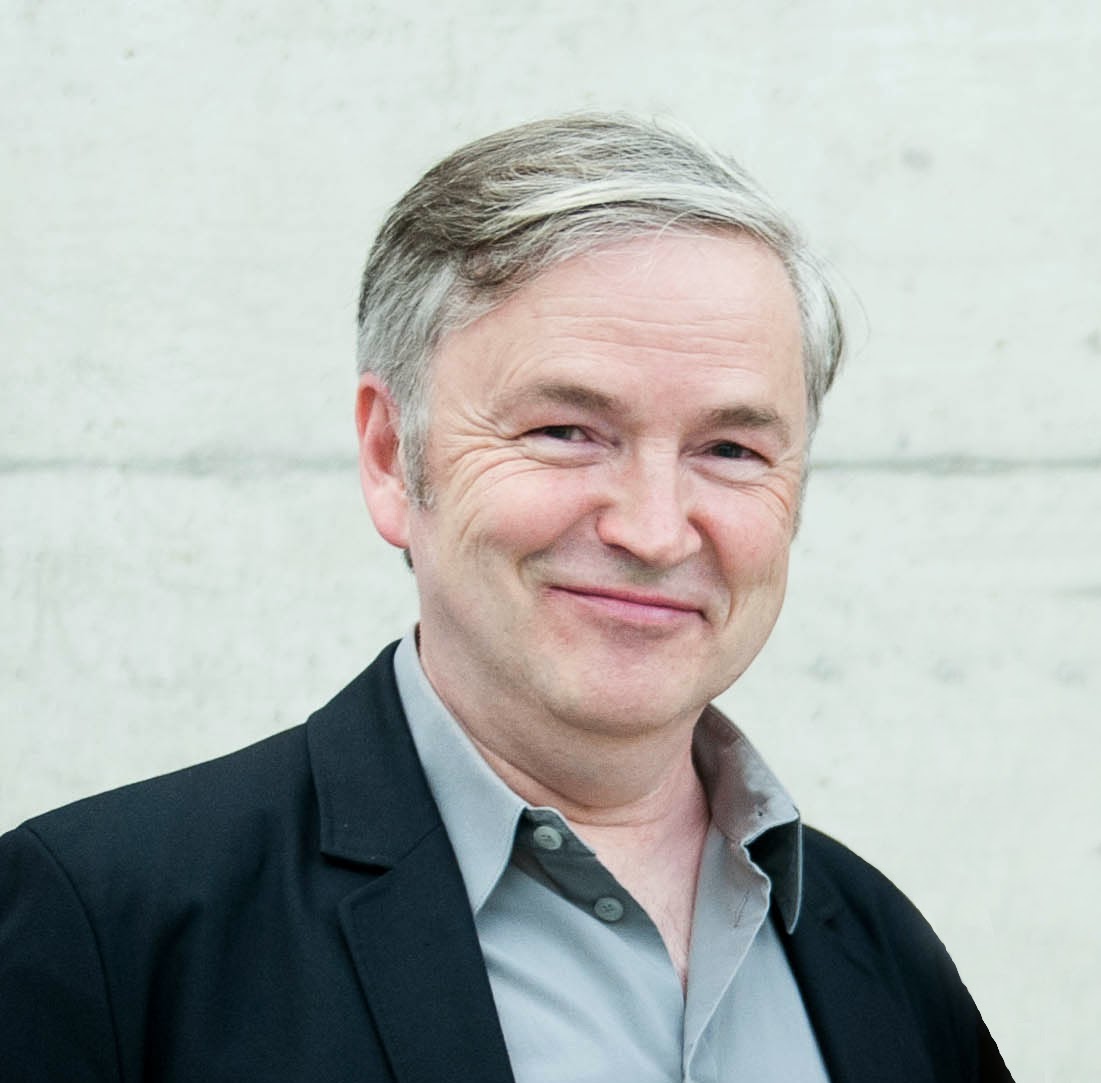
Helmut Draxler. Foto: Natascha Unkart
Sammlungen lassen sich im Rahmen einer Ausstellung meist nur in Form einer Auswahl zeigen. Da sich Sammlungen selbst bereits stets einer Auswahl an Gegenständen verdanken, geraten innerhalb der Ausstellung einer Sammlung zwei Formen der Auswahl mit jeweils unterschiedlichen Akzentuierungen aneinander. Dieser Unterschied wird meist im Sinne einer aufeinander bezogenen, zunehmenden Erhöhung des Werts der ausgewählten Gegenstände verstanden, indem immer genauere Kriterien zum Tragen kommen und damit die Qualität und der künstlerische und kulturelle Anspruch der einzelnen Gegenstände als „Werke“ sichergestellt werden können. Doch zweifellos sind solche Annahmen trügerisch. Sie unterschätzen die Widersprüche zwischen den einzelnen Schritten des Auswählens und den Eigensinn jeder Auswahl. Dementsprechend erschien mir das Angebot, die Sammlung der Generali Foundation in einer Ausstellung darzustellen, sie durch eine Auswahl zu spezifizieren und zu reflektieren, als eine gute Gelegenheit, die Kategorien Sammlung, Ausstellung und Werk zu überdenken und ein Projekt ins Auge zu fassen, dass diese Kategorien in ihrem historischen und begrifflichen Zusammenhang zu rekonstruieren versucht. Es ging also nicht darum, tatsächlich die Sammlung zu bewerten und in ihren besten Stücken darzustellen, sondern sie als exemplarische kulturelle Formation hinsichtlich der Strukturbedingungen der Moderne ernst zu nehmen. Das  Befragen der strukturellen Bedingungen von Sammlung, Ausstellung und Werk mag letztlich die Frage zu beantworten helfen, wie und ob eigentlich kritische Kunst gesammelt werden kann und worauf die Annahmen kritischer Kunstpraktiken überhaupt gegründet sind.

Montag, 25. März 2013

Symposium: Beyond the Canon. The Paradoxes of Conceptual Art

Beyond the Canon. The Paradoxes of Conceptual art. Photo: Dario Punales


March 22, 2013, 4–8.30 p.m. (English)

Guillaume Désanges, Curator
Camiel van Winkel, Art critic
Luke Skrebowski, Art historian
Sabeth Buchmann, Art critic
Moderation: Christian Höller, Art critic


Based on the exhibition Amazing! Clever! Linguistic! An Adventure in Conceptual Art, the symposium raises and discusses questions around curating and exhibiting Conceptual art, examining its definitions, canonizations, and reterritorializations, its paradoxes and its aesthetic. The curator Guillaume Désanges uses his current show as an example to explain what “conceptual” curating can mean today; Camiel van Winkel talks about the paradoxes—the successes and failures—of Conceptual art and about its afterlife in contemporary art. Luke Skrebowski, meanwhile, proposes that, as part of the historicization of Conceptual art, we reassess the status of aesthetics. And Sabeth Buchmann discusses the exhibition practices that were established in the context of the historic Conceptual art, focusing on presentation and reception as well as on new media and publication formats and their consequences for the emergence of a new type of curator.

Additional documentation of events held at the Generali Foundation since the 1990s—lectures, symposia, conversations with the artists, guided tours, and performances—is accessible via two terminals at the Study Center.

Freitag, 22. Februar 2013

Gottfried Bechtold, Künstler, im Gespräch mit Claus Philipp, Filmkritiker

Gespräch: Gottfried Bechtold mit Claus Philipp, 2013 © Generali Foundation. Foto: Dario Punales

21. Februar 2013, 19 Uhr (Deutsch)

Gottfried Bechtold wird über seine Filme sprechen, die sich größtenteils in der Sammlung der Generali Foundation befinden, sowie über den konzeptuellen Ansatz in seiner künstlerischen Arbeit. Von der Bildhauerei ausgehend, begann Bechtold, beeinflusst durch Post-Minimal-, Land- und Concept-Art, in den späten 1960er Jahren mit unterschiedlichsten Medien wie Fotografie, Film und Video zu arbeiten, wobei deren Qualitäten als Kommunikationssysteme im Mittelpunkt seiner Analysen standen. Waren seine Filme u. a. noch von der Übersetzung des Zeichensystems Sprache in jenes des Films bestimmt, so beschäftigte er sich in seinen Videos zwischen 1970 und 1973 mit der Überprüfung einer bestimmten, durch das neue Medium Video vermittelten Realität. Den forschenden und experimentellen Charakter seiner Arbeiten, die oft Versuchsanordnungen glichen, behielt er auch bei seiner Video-Installation (1972) und der auf der Documenta 5 in Kassel, 1972, realisierten Arbeit 100 Tage Anwesenheit in Kassel bei. Neben diesen stark konzeptuell geprägten Ansätzen beschäftigte sich Gottfried Bechtold immer wieder mit der Erweiterung des klassischen Skulpturbegriffs. In Installationen für den öffentlichen Raum, die er nach intensiver Beschäftigung mit ortsspezifischen Gegebenheiten entwickelte, kamen die Faktoren Zeit und Raum oder das immaterielle Medium Licht dazu. Die Interkontinentale Skulptur (1986) für das Vienna International Center etwa besteht aus Monolithen aus fünf Kontinenten, die durch einen sich im Tagesablauf verändernden Laserstrahl verbunden sind.

Weitere Dokumentationen von Veranstaltungen, die seit den 1990er Jahren in der Generali Foundation stattgefunden haben – Vorträge, Symposien, Künstler_innengespräche, Führungen und Performances –, sind auf zwei Terminals im Studienraum zugänglich.

Freitag, 1. Februar 2013

Vortrag: Ernst Caramelle, Künstler

Ernst Caramelle, Vortrag, 2013 © Generali Foundation. Foto: Dario Punales

31. Januar 2013, 19 Uhr


Der Künstler spricht über sein konzeptuelles Werk seit den 1970er Jahren, das von medienkritischen Untersuchungen über Fragen der Repräsentation bis zu großformatiger Wandmalerei reicht. Caramelles konzeptueller Ansatz hat besonders in vervielfältigbaren, ephemeren Medien wie Künstlerbüchern, Einladungen, Plakaten und Editionen seinen Niederschlag gefunden. Diese stellen in Caramelles Œuvre einen großen Werkkomplex dar. 1974 begann er mit dem Medium Video zu arbeiten und untersuchte die Fusion von realem und repräsentiertem Raum anhand seiner Serie von Video-Performances, die als Video-Landschaften dokumentiert sind. In den Fotografien, die in der Ausstellung zu sehen sind, wird der Fernsehmonitor regelrecht zum Rahmen für Untersuchungen, die seine physischen Grenzen, seine scheinbare Objektivität und seinen illusionistischen Charakter aufzeigen. „Da durch den Monitor Realität verdeckt wird, versuche ich dieses unterbrochene Seherlebnis wieder sichtbar zu machen, bzw. zu ergänzen. Hier wird die Videotechnik nicht zur Wiedergabe einer Handlung (Aktion) benutzt, sondern um reine Standbilder zu erzeugen. Ergänzungen oder Verfremdungen unterbrochener Realität…“ (Ernst Caramelle)

Weitere Dokumentationen von Veranstaltungen, die seit den 1990er Jahren in der Generali Foundation stattgefunden haben – Vorträge, Symposien, Künstler_innengespräche, Führungen und Performances –, sind auf zwei Terminals im Studienraum zugänglich.

Samstag, 19. Januar 2013

Signs and Wonders. Theory of Modern Art/Theory of Damned Art

Guillaume Désanges, Signs and Wonders. Theory of Modern Art/Theory of Damned Art. Lecture-performance.

January 18, 2013, 7 p.m.
A lecture performance by Guillaume Désanges, assisted by Alexandra Delage


Signs and Wonders is a new work following two recent experimental lectures developed by Guillaume Désanges: A History of Performance in 20 Minutes and Vox Artisti. This new project proposes a subjective study of some major figures of modern art, as well as Minimal and Conceptual art, in the form of a mystical investigation. The work will question the links between forms and signs, art and kaballah, nature and culture, and coincidences and symbols. The lecture promises to shed light on how certain elementary geometric patterns related to rational and mathematical models have fed into twentieth-century avant-gardes and modernity in general. Désanges suggests that nowadays these patterns remain objects of representation and of knowledge but also of cult and worship. Considering artists from Marcel Duchamp and Kazimir Malevich to Sol LeWitt, Donald Judd, Bruce Nauman, and Dan Graham, the lecture investigates, in a spirit of adventure, how repetitive signs and their archaic symbolism might open up a secret history of modernity, a hidden language, a code, or a mystical tradition, with initiates, filiations, occult rituals, and heresies.
Speculation based on a game of coincidences, the lecture is entirely illustrated through a shadow play, realized onstage without virtuosity, yet with a desire to demonstrate and work with shapes, light, and darkness. An opportunity to measure the illusionistic and magical potential of practices that we sometimes too easily pigeonhole in the category of rationalism. What you see is not always what you see.
Signs and Wonders is coproduced by Halles de Schaerbeek (Bruxelles), Centre Pompidou (Paris), and FRAC Lorraine (Metz). It was presented at Tate Modern (London) in February 2009