Posts mit dem Label Helmut Draxler werden angezeigt. Alle Posts anzeigen

Montag, 2. Dezember 2013

Anniversary's publication

Cover, A Book about Collecting and Exhibiting Conceptual Art after Conceptual Art, 2013. Photo: Dario Punales

A Book about Collecting and Exhibiting Conceptual Art after Conceptual Art
Eds. Sabine Folie, Georgia Holz, Ilse Lafer
With texts by Sabeth Buchmann, Juli Carson, Guillaume Désanges, Helmut Draxler, Sabine Folie, Christian Höller, Eve Meltzer, Gertrud Sandqvist, Luke Skrebowski, Ian Wallace, Camiel van Winkel, and a conversation between Hal Foster und Helmut Draxler
Germ./Engl., 540 p., 430 color- and b&w-ill., hardcover
Verlag der Buchhandlung Walther König, Cologne

Shop

Mittwoch, 27. November 2013

Curator Gertrud Sandqvist on her current exhibition at Generali Foundation "Against Method"

Georgia Holz: This year’s guest curators—Guillaume Désanges, Helmut Draxler, and now you—have chosen very diverse approaches in presenting the collection. While Guillaume brought together a rather didactic and as he called it popular exhibition for which he selected many “pioneers” of Conceptual art, Helmut reflected on the interaction of collecting and exhibition making at the Generali Foundation. Your approach again is a different one, how would you describe it?

Gertrud Sandqvist: A collection could be there mainly for study purposes, but as soon as one exhibits it, it also creates an art experience, and it is this experience I would like to focus on. When it comes to Conceptual art, this focus is not at all self-evident on the contrary many of the experiments and thoughts about Conceptual art have questioned what this “experience” consists of. But if one looks closer into many of the works in the Generali Foundation Collection, they point at or call for precisely the experience, which means that there is a difference between seeing them in reality and reading about them or to "get the idea". If this difference exists, I mean that one could talk about an art experience also when it comes to Conceptual art, which means that there is integrity in the artwork which goes beyond its concept.

Georgia Holz: You said, what interests you most in the Generali Foundation Collection is its ambiguities, fissures as you call them. While the collection as a whole is striving for identity as a coherent Conceptual art collection, it is the autonomy of artworks themselves that is able to break with this reading. You use the phrase "to spill over" for describing this autonomy. Could you further explain what this "spilling over" of the art works means?

Gertrud Sandqvist: I believe Marcel Duchamp had a point when he was writing about the “art co-efficient,” which according to him is there in all art. The art co-efficient means that there is something in the artwork that the artist didn't intend, and it is precisely the unintended, which transforms a work into art. This is of course exactly what the conceptual artists denied or at least tried to avoid. But as soon as one materializes an idea something happens, which cannot be completely controlled—not to say what happens when this artwork meets the spectator. This is becoming even more obvious when you find such a fine and coherent collection as the one in the Generali Foundation. A collection is a result of choices, of decisions, in the end of interpretations. It means that one, from the extremely rich “intensity field,” which is an artwork, decides on one (or two or more) parameters which make it possible to include the work in, for instance a collection of Conceptual art. But even here there are aspects of the artwork which act diversely. This is a great strength, I think, which makes it possible for the artwork to expand over the moment in time and context when it ws conceived.

Georgia Holz is Assistant-Curator at Generali Foundation.

Donnerstag, 27. Juni 2013

Symposium: Der Wert des "Ausstellungswertes"


Mittwoch, 26. Juni 2013, 17–20 Uhr (Deutsch)
Symposium


Walter Benjamin setzt den Ausstellungswert dem Kultwert entgegen, ohne ihn genauer zu bestimmen. Das Symposium versucht an unterschiedlichen Lektüren, diesen Begriff zwischen den Werten der Sammlung und dem Wert des Werks historisch und systematisch zu verorten.

Eva Kernbauer: Conversation Pieces (Vortrag)
Kathrin Busch: Bild – Berührung – Exposition (Vortrag)
Gregor Stemmrich: Ökonomien der Aufmerksamkeit (Vortrag)
Podiumsdiskussion mit allen Teilnehmenden
Moderation: Helmut Draxler

Dienstag, 25. Juni 2013

The Curatorial. A Philosophy of Curating / On Collecting Critical Art Practices

Lecture by Jean-Paul Martinon, The Content of Form, 2013 © Generali Foundation. Photo: Dario Punales

Hal Foster in conversation with Helmut Draxler, The Content of Form, 2013 © Generali Foundation. Photo: Dario Punales

June 22, 2013 5-7 p.m. 
(English)

The Curatorial. A Philosophy of Curating
Lecture by Jean-Paul Martinon, philosopher, followed by a conversation with 
Helmut Draxler, art historian

On Collecting Critical Art Practices
Hal Foster, art historian, art critic in conversation with Helmut Draxler


This talk will put forward ten theses on the philosophy of curating. These short theses will not comment on the exhibition, nor put forward other examples or attempts to create a chronology of key exhibitions (thus generating an art history of exhibition practices). Instead, they intend to discuss the differences between ‘curating’ and ‘the curatorial’. If ‘curating’ is a gamut of professional practices for setting up exhibitions, then ‘the curatorial’ explores what takes place on the stage set up, both intentionally and unintentionally, by the curator. Ultimately, the aim of these ten theses is to continue Helmut Draxler’s questioning of the activity of curating as exposed inThe Content of Form.

Additional documentation of events held at the Generali Foundation since the 1990s—lectures, symposia, conversations with the artists, guided tours, and performances—is accessible via two terminals at the Study Center.

Donnerstag, 16. Mai 2013

Kuratorisches Statement: The Content of Form

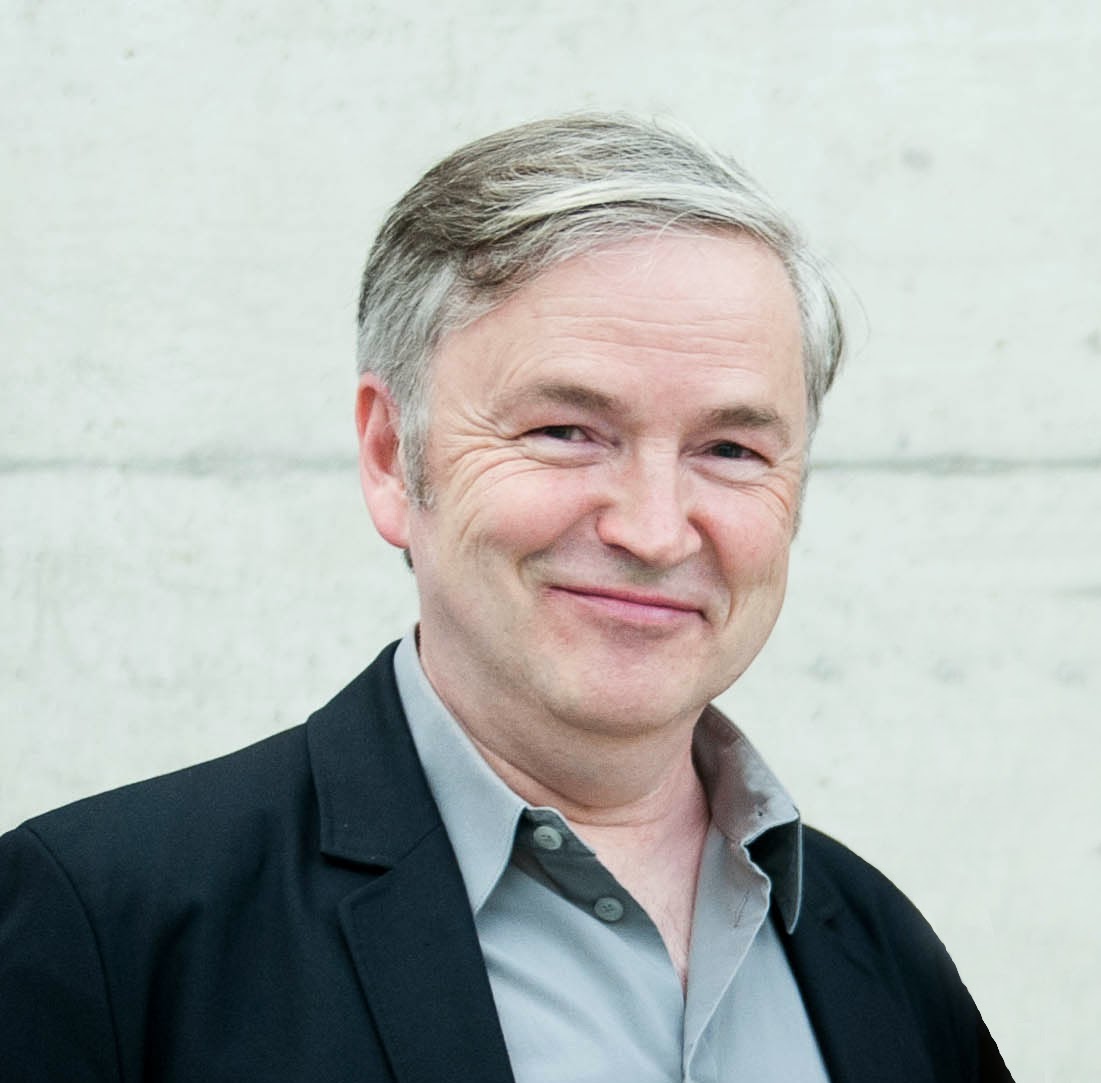
Helmut Draxler. Foto: Natascha Unkart
Sammlungen lassen sich im Rahmen einer Ausstellung meist nur in Form einer Auswahl zeigen. Da sich Sammlungen selbst bereits stets einer Auswahl an Gegenständen verdanken, geraten innerhalb der Ausstellung einer Sammlung zwei Formen der Auswahl mit jeweils unterschiedlichen Akzentuierungen aneinander. Dieser Unterschied wird meist im Sinne einer aufeinander bezogenen, zunehmenden Erhöhung des Werts der ausgewählten Gegenstände verstanden, indem immer genauere Kriterien zum Tragen kommen und damit die Qualität und der künstlerische und kulturelle Anspruch der einzelnen Gegenstände als „Werke“ sichergestellt werden können. Doch zweifellos sind solche Annahmen trügerisch. Sie unterschätzen die Widersprüche zwischen den einzelnen Schritten des Auswählens und den Eigensinn jeder Auswahl. Dementsprechend erschien mir das Angebot, die Sammlung der Generali Foundation in einer Ausstellung darzustellen, sie durch eine Auswahl zu spezifizieren und zu reflektieren, als eine gute Gelegenheit, die Kategorien Sammlung, Ausstellung und Werk zu überdenken und ein Projekt ins Auge zu fassen, dass diese Kategorien in ihrem historischen und begrifflichen Zusammenhang zu rekonstruieren versucht. Es ging also nicht darum, tatsächlich die Sammlung zu bewerten und in ihren besten Stücken darzustellen, sondern sie als exemplarische kulturelle Formation hinsichtlich der Strukturbedingungen der Moderne ernst zu nehmen. Das  Befragen der strukturellen Bedingungen von Sammlung, Ausstellung und Werk mag letztlich die Frage zu beantworten helfen, wie und ob eigentlich kritische Kunst gesammelt werden kann und worauf die Annahmen kritischer Kunstpraktiken überhaupt gegründet sind.